Inspectial
- Inspectial
- Free checklists
- Field inspections
Site inspection checklist
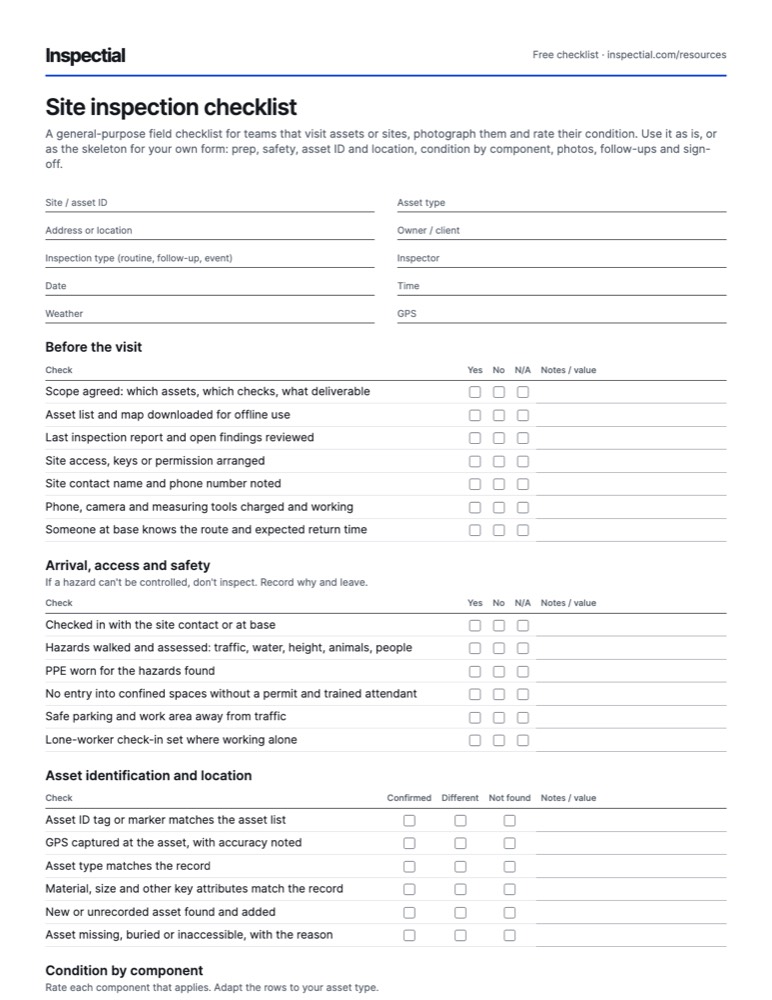
A general-purpose field checklist for teams that visit assets or sites, photograph them and rate their condition. Use it as is, or as the skeleton for your own form: prep, safety, asset ID and location, condition by component, photos, follow-ups and sign-off.
What is a site inspection checklist?
A site inspection checklist is a structured field form used to record the condition of a site or asset during a visit. It covers preparation, safety, identification and GPS location, a condition rating for each component, a photo record and follow-up actions, so every inspector records the same things and findings can be compared over time.
When to inspect
Set by whatever drives the inspection: a regulation, a permit condition, a maintenance plan, a contract or an event such as a storm or complaint. Inspection bodies working under ISO/IEC 17020 must define their inspection methods and records. Where no rule applies, inspect often enough to catch a defect before it becomes a failure, and keep the interval the same so results stay comparable.
The checklist
Every row is one observable check. Mark one answer per row and write what you saw or measured; the PDF adds a findings table and sign-off.
Header
- Site / asset ID
- Asset type
- Address or location
- Owner / client
- Inspection type (routine, follow-up, event)
- Inspector
- Date
- Time
- Weather
- GPS
Before the visit
| Check | Yes | No | N/A | Notes / value |
|---|---|---|---|---|
| Scope agreed: which assets, which checks, what deliverable | ||||
| Asset list and map downloaded for offline use | ||||
| Last inspection report and open findings reviewed | ||||
| Site access, keys or permission arranged | ||||
| Site contact name and phone number noted | ||||
| Phone, camera and measuring tools charged and working | ||||
| Someone at base knows the route and expected return time |
Arrival, access and safety
If a hazard can't be controlled, don't inspect. Record why and leave.
| Check | Yes | No | N/A | Notes / value |
|---|---|---|---|---|
| Checked in with the site contact or at base | ||||
| Hazards walked and assessed: traffic, water, height, animals, people | ||||
| PPE worn for the hazards found | ||||
| No entry into confined spaces without a permit and trained attendant | ||||
| Safe parking and work area away from traffic | ||||
| Lone-worker check-in set where working alone |
Asset identification and location
| Check | Confirmed | Different | Not found | Notes / value |
|---|---|---|---|---|
| Asset ID tag or marker matches the asset list | ||||
| GPS captured at the asset, with accuracy noted | ||||
| Asset type matches the record | ||||
| Material, size and other key attributes match the record | ||||
| New or unrecorded asset found and added | ||||
| Asset missing, buried or inaccessible, with the reason |
Condition by component
Rate each component that applies. Adapt the rows to your asset type.
| Check | Good | Fair | Poor | Critical | N/A | Notes / value |
|---|---|---|---|---|---|---|
| Main structure or body | ||||||
| Surfaces, coatings and finishes | ||||||
| Joints, seams and connections | ||||||
| Foundation, base or supports | ||||||
| Moving parts, valves, doors or covers | ||||||
| Drainage and water management | ||||||
| Access, signage and markings | ||||||
| Safety features: guards, rails, locks, warnings | ||||||
| Vegetation and surroundings | ||||||
| Signs of vandalism, theft or unauthorized use | ||||||
| Overall asset condition |
Photo record
| Check | Yes | No | N/A | Notes / value |
|---|---|---|---|---|
| Overview photo of the whole asset in its setting | ||||
| ID tag or marker photographed | ||||
| Each rated component photographed | ||||
| Every defect, with a wide shot for location and a close-up for detail | ||||
| Scale reference in close-ups: tape, ruler or known object | ||||
| Same viewpoints as the last inspection, where photos exist |
Findings and follow-up
| Check | Yes | No | N/A | Notes / value |
|---|---|---|---|---|
| Each defect recorded with component, location, size and rating | ||||
| Measurements recorded with units and the tool used | ||||
| Urgent hazards reported to the owner before leaving site | ||||
| Recommended action and priority set for each Poor or Critical item | ||||
| Work orders or referrals raised | ||||
| Previous findings checked: fixed, unchanged or worse |
Sign-off
| Check | Yes | No | N/A | Notes / value |
|---|---|---|---|---|
| Inspector name, signature, date and time | ||||
| Site contact informed of key findings | ||||
| Data and photos synced or backed up | ||||
| Report reviewed and approved by a second person where required |
Condition rating
Rate the asset by its worst defect, best to worst.
- Good
- Functions as intended. Minor, isolated defects at most.
- Fair
- Moderate defects that don't yet affect function or safety. Monitor or schedule maintenance.
- Poor
- Significant defects that affect function or shorten service life. Repair needed.
- Critical
- Failed, unsafe or at risk of failure. Immediate action.
Photos to take
- Overview of the asset in its setting, with a landmark for orientation
- ID tag, nameplate or marker, readable
- Each component on the checklist, one photo at least
- Every defect: one wide for location, one close-up with a scale
- Measurements with the tape or gauge readable
- Access route and any hazard that limited the inspection
Field tips
- Inspect in the same order every time. A fixed route through the asset is what makes this year's record comparable with last year's.
- One finding per row. Two problems in one note get one fix and one forgotten.
- Write what you see, not what you assume. 'Crack 2 ft long at the north corner' beats 'structural issue'.
- Use the rating definitions, not gut feel. Two inspectors should give the same asset the same rating.
- Note what you couldn't inspect and why. A blank row reads as 'fine'.
- Take the photo you'd want if someone challenged the finding a year from now: location, scale and the defect in one set.
- Sync before you leave an area with signal, or carry a backup. Lost field data means another site visit.
Standards and sources
Checked against these sources on . Your agency's own manual takes precedence.
Questions
What should a site inspection checklist include?
Preparation and safety, asset identification with GPS, a condition rating for each component, a photo record, findings with follow-up actions, and a sign-off. Each row should be one observable check. Add sections specific to your asset type, such as hydraulics for a culvert or ground-line checks for a pole.
How do I make a site inspection checklist?
Start from the decisions the inspection must support, then list the components of the asset and what can go wrong with each. Write one observable check per row, define a rating scale with plain criteria, and set a photo protocol. Test it on a few sites with two inspectors and fix rows where they disagree.
What is the difference between a site inspection and a site visit?
A site visit can be informal: a look around, a meeting, a progress check. A site inspection follows a defined checklist and rating scale, records evidence and produces findings someone acts on. If the result needs to be compared or defended later, treat it as an inspection.
What condition rating scale should I use?
Use the scale your industry or client already uses, if one exists, such as a standard's condition codes. Otherwise a four-level scale (Good, Fair, Poor, Critical) with written definitions works for most assets. What matters is that each level is defined by what the inspector can see, so ratings are consistent.
How many photos should a site inspection include?
Enough to show the whole asset, its ID, each component and every defect. A practical minimum is an overview, the ID tag, one per component and a wide plus a close-up for each defect, with a scale in close-ups. Repeating last time's viewpoints makes changes easy to see.
Do this inspection on your phone: AI drafts it, you approve
Inspectial turns the photos, voice notes and GPS from this checklist into a structured, map-ready inspection record. Every finding links to its photo, and nothing is official until you approve it.
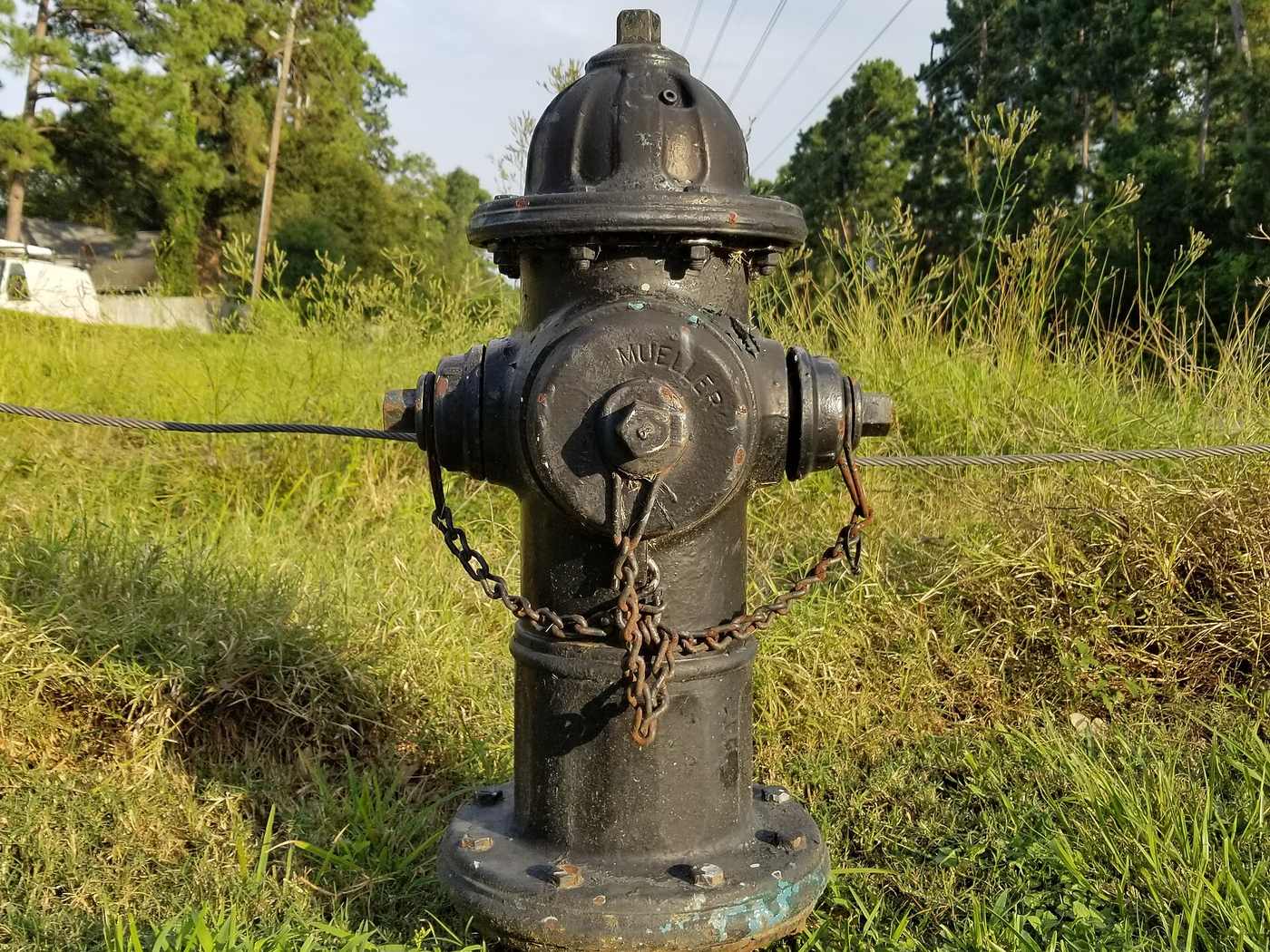
- Bonnet · paintchipped, bare metal at flangeAI suggested
- Nozzles · pumper capin placeHuman verified
- Nozzles · hose capin placeHuman verified