Inspectial
- Inspectial
- Free checklists
- Stormwater (MS4)
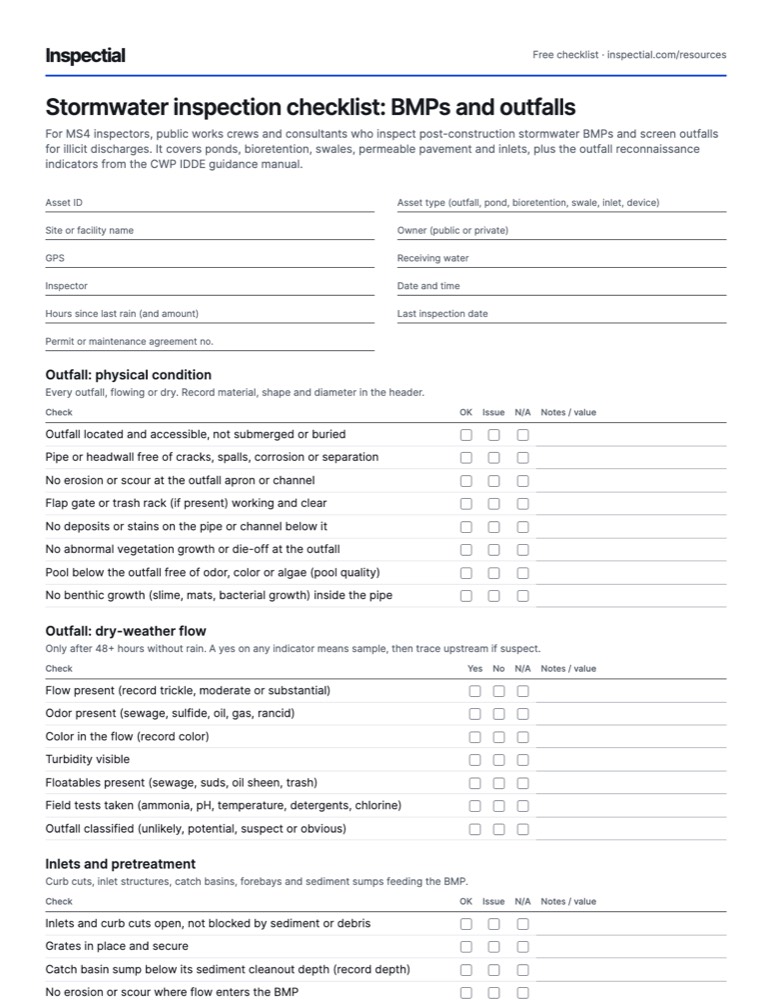
Stormwater inspection checklist: BMPs and outfalls
For MS4 inspectors, public works crews and consultants who inspect post-construction stormwater BMPs and screen outfalls for illicit discharges. It covers ponds, bioretention, swales, permeable pavement and inlets, plus the outfall reconnaissance indicators from the CWP IDDE guidance manual.
What is a stormwater inspection checklist?
A stormwater inspection checklist is a field form for checking that stormwater infrastructure works and is not carrying pollutants. For post-construction BMPs it covers inlets, pretreatment, the treatment area, outlet structures, embankments and vegetation. For outfalls it records flow, color, odor, turbidity, floatables, deposits and structural damage during dry-weather screening for illicit discharges.
When to inspect
MS4 permits under 40 CFR 122.34 require long-term operation and maintenance of post-construction BMPs and a program to detect illicit discharges, but the state permit sets the frequency. Examples: Georgia's Phase II permit requires every post-construction structure to be inspected within the 5-year permit term, and Pennsylvania has new permittees screen all outfalls twice per term. Screen outfalls after at least 48 hours of dry weather.
The checklist
Every row is one observable check. Mark one answer per row and write what you saw or measured; the PDF adds a findings table and sign-off.
Header
- Asset ID
- Asset type (outfall, pond, bioretention, swale, inlet, device)
- Site or facility name
- Owner (public or private)
- GPS
- Receiving water
- Inspector
- Date and time
- Hours since last rain (and amount)
- Last inspection date
- Permit or maintenance agreement no.
Outfall: physical condition
Every outfall, flowing or dry. Record material, shape and diameter in the header.
| Check | OK | Issue | N/A | Notes / value |
|---|---|---|---|---|
| Outfall located and accessible, not submerged or buried | ||||
| Pipe or headwall free of cracks, spalls, corrosion or separation | ||||
| No erosion or scour at the outfall apron or channel | ||||
| Flap gate or trash rack (if present) working and clear | ||||
| No deposits or stains on the pipe or channel below it | ||||
| No abnormal vegetation growth or die-off at the outfall | ||||
| Pool below the outfall free of odor, color or algae (pool quality) | ||||
| No benthic growth (slime, mats, bacterial growth) inside the pipe |
Outfall: dry-weather flow
Only after 48+ hours without rain. A yes on any indicator means sample, then trace upstream if suspect.
| Check | Yes | No | N/A | Notes / value |
|---|---|---|---|---|
| Flow present (record trickle, moderate or substantial) | ||||
| Odor present (sewage, sulfide, oil, gas, rancid) | ||||
| Color in the flow (record color) | ||||
| Turbidity visible | ||||
| Floatables present (sewage, suds, oil sheen, trash) | ||||
| Field tests taken (ammonia, pH, temperature, detergents, chlorine) | ||||
| Outfall classified (unlikely, potential, suspect or obvious) |
Inlets and pretreatment
Curb cuts, inlet structures, catch basins, forebays and sediment sumps feeding the BMP.
| Check | OK | Issue | N/A | Notes / value |
|---|---|---|---|---|
| Inlets and curb cuts open, not blocked by sediment or debris | ||||
| Grates in place and secure | ||||
| Catch basin sump below its sediment cleanout depth (record depth) | ||||
| No erosion or scour where flow enters the BMP | ||||
| Forebay sediment below its cleanout marker or design depth | ||||
| No trash, oil or illicit material in the pretreatment area |
Ponds and basins (wet, dry, detention)
| Check | OK | Issue | N/A | Notes / value |
|---|---|---|---|---|
| Water level normal for the pond type and season | ||||
| Sediment accumulation not reducing storage (record estimate) | ||||
| No oil sheen, algae bloom or floating debris | ||||
| Embankment free of erosion, slumping or cracking | ||||
| No trees or woody vegetation on the embankment | ||||
| No animal burrows in the embankment | ||||
| No seepage or wet areas on the downstream face | ||||
| Side slopes and shoreline stable, vegetated | ||||
| No mosquito breeding in standing water (dry basins) |
Bioretention, swales and permeable pavement
| Check | OK | Issue | N/A | Notes / value |
|---|---|---|---|---|
| Ponded water drains within the design time (often 48–72 hours) | ||||
| Surface free of sediment crust or clogging | ||||
| Mulch or media in place, not washed out | ||||
| Plants alive and covering the area, no invasive or woody growth | ||||
| No erosion channels or bare soil | ||||
| Underdrain cleanouts capped and undamaged | ||||
| Swale flowing along its length, no ponding or rills | ||||
| Permeable pavement free of sediment, not clogged | ||||
| Permeable pavement surface intact, no settling or broken units |
Outlet structure and spillway
| Check | OK | Issue | N/A | Notes / value |
|---|---|---|---|---|
| Riser, orifice and weir clear of debris | ||||
| Trash rack in place and not clogged | ||||
| Riser and outlet pipe free of cracks, spalls or corrosion | ||||
| Outlet channel stable, no scour below the outlet | ||||
| Emergency spillway clear, stable and not eroding | ||||
| Valves and drawdown devices operable (if present) |
Access and follow-up
| Check | Yes | No | N/A | Notes / value |
|---|---|---|---|---|
| Access route and maintenance easement clear | ||||
| Safety hazard present (open structure, steep drop, unstable bank) | ||||
| Maintenance notice to the owner needed | ||||
| Repair needed beyond routine maintenance | ||||
| Illicit discharge suspected and reported for investigation | ||||
| Re-inspection date set |
Maintenance scale
- No action
- Functions as designed. Nothing to fix before the next routine inspection.
- Maintenance needed
- Routine work: remove sediment or trash, mow, replace mulch, clear an inlet. Schedule it.
- Repair needed
- A component is damaged or not working: eroded embankment, broken outlet structure, clogged media. Repair and reinspect.
- Failed
- The practice no longer treats or controls runoff, or there's a safety risk. Act now.
Photos to take
- Overview of the BMP or outfall with a landmark for location
- Each inlet or outfall opening, straight on
- Outlet structure, trash rack and spillway
- Embankment crest and downstream face (ponds)
- Any flow at an outfall, with a reference for color and clarity
- Close-up of each defect marked maintenance, repair or failed
Field tips
- Screen outfalls only after at least 48 hours of dry weather; flow sooner after rain is usually stormwater, not an illicit discharge.
- Revisit dry outfalls that show stains, deposits or odor; intermittent discharges are often missed on a single visit.
- Measure sediment depth with a probe or rod and record the number; "some sediment" can't be compared next year.
- Check bioretention drawdown 48–72 hours after rain; a dry surface on a sunny day tells you nothing about clogging.
- Note who owns the BMP before you leave; private BMPs usually need a maintenance letter to the owner, not a work order.
- Use the same asset ID as your MS4 map, so counts roll straight into the annual report.
Standards and sources
Checked against these sources on . Your agency's own manual takes precedence.
Questions
What is an MS4 inspection?
An MS4 inspection is a check a municipal separate storm sewer system operator does to meet its NPDES permit. It covers outfalls for illicit discharges, construction sites, post-construction BMPs and municipal facilities. Results feed the permit's annual report, usually as counts and percentages of assets inspected.
How often do stormwater BMPs need to be inspected?
Your state MS4 permit or the BMP's maintenance agreement sets the frequency. Many programs inspect public BMPs annually and require every post-construction BMP to be inspected at least once per 5-year permit term, as Georgia's Phase II permit does. Inspect again after large storms if the permit or manual asks for it.
What is dry-weather outfall screening?
Dry-weather screening means visiting stormwater outfalls after at least 48 hours without rain, when they should be dry. Any flow, odor, color, sheen or suds may point to an illicit connection or dumping. The inspector records the indicators, tests any flow, classifies the outfall and traces suspect discharges upstream.
What are the outfall classifications in the ORI?
The Center for Watershed Protection's Outfall Reconnaissance Inventory designates outfalls as having obvious, suspect, potential or unlikely discharge potential, based on flow and physical indicators. Obvious discharges are reported for immediate investigation; suspect and potential outfalls get sampling or a return visit.
What are common stormwater BMP maintenance problems?
The most common are sediment build-up in forebays, inlets and sumps, clogged outlet structures and trash racks, standing water in bioretention past its drawdown time, eroded embankments and spillways, and trees or burrows on pond embankments. Most are routine maintenance; damaged structures or embankments need repair.
Do this inspection on your phone: AI drafts it, you approve
Inspectial turns the photos, voice notes and GPS from this checklist into a structured, map-ready inspection record. Every finding links to its photo, and nothing is official until you approve it.
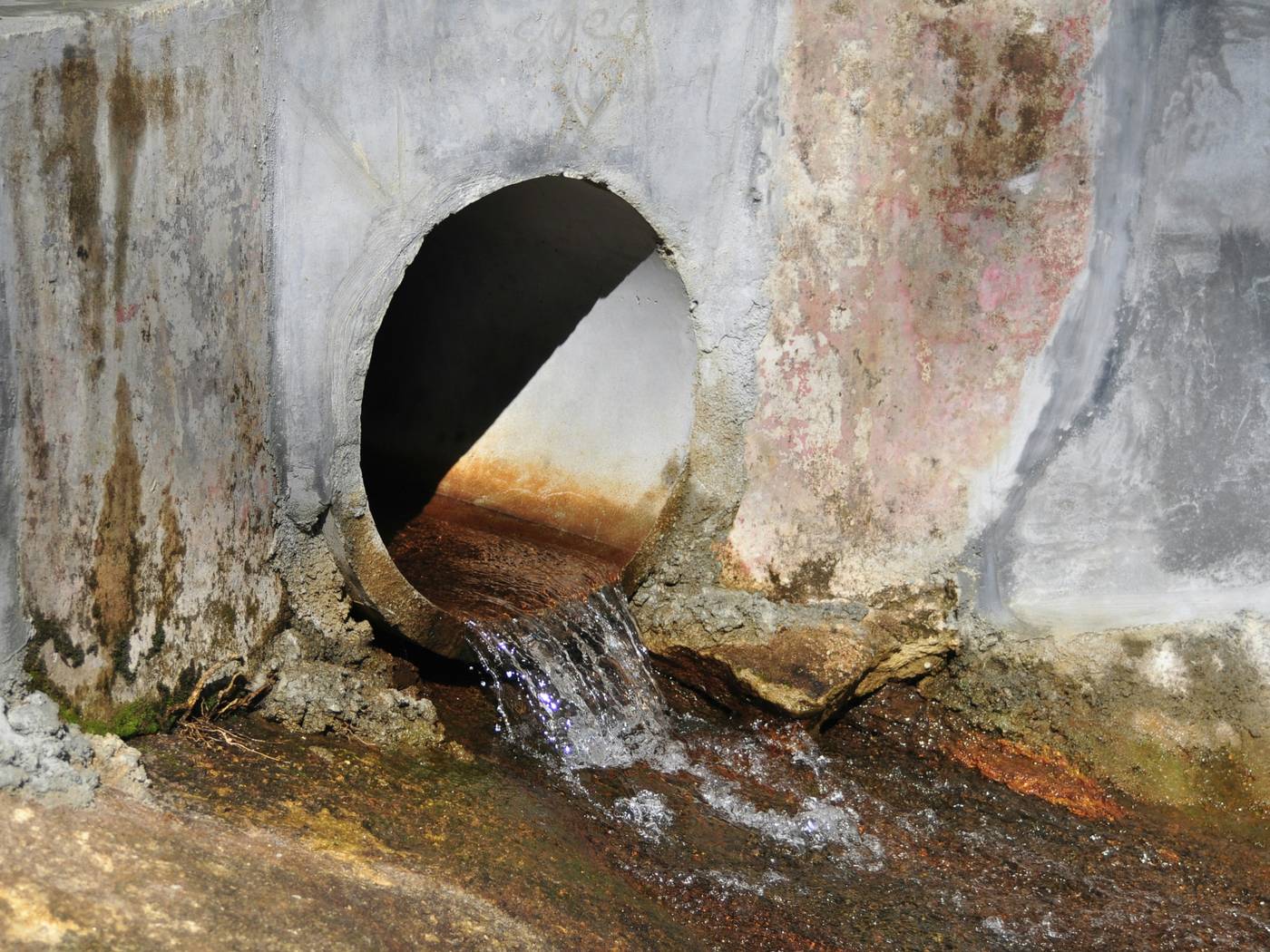
- Outfall · openingunobstructedHuman verified
- Outfall · flowpresent, clearHuman verified
- Pipe invert · depositsrust-orange stainingAI suggested