Inspectial
- Inspectial
- Free checklists
- Stormwater (MS4)
Storm drain inspection checklist
A field checklist for catch basins, curb and grate inlets and other storm drain structures, written for MS4 operation and maintenance programs. It follows the visit in order: street and surroundings, grate and frame, structure, sump, pipes, illicit discharge signs, then follow-up.
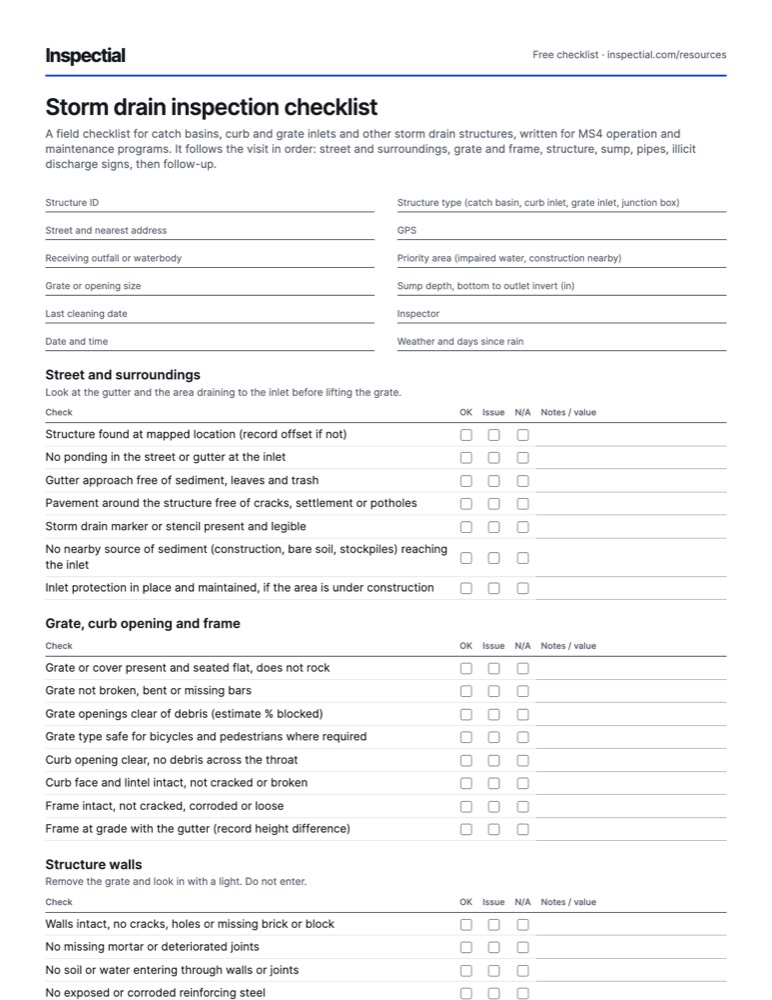
What is a storm drain inspection checklist?
A storm drain inspection checklist is a field form for checking catch basins, curb inlets and storm structures. The inspector checks the grate or curb opening, frame, walls, sump sediment depth and connecting pipes, notes trash, oil and signs of illicit discharge, and records whether cleaning or repair is needed. MS4 permits use these records as proof of good housekeeping.
When to inspect
Your state MS4 permit sets the frequency under the good housekeeping measure of 40 CFR 122.34. Many permits require a cleaning and inspection schedule based on how fast basins fill. The Massachusetts small MS4 permit, for example, aims to keep sumps no more than 50% full and asks for more frequent cleaning or a source search when a basin is over half full at two consecutive inspections. Also inspect after large storms and before winter.
The checklist
Every row is one observable check. Mark one answer per row and write what you saw or measured; the PDF adds a findings table and sign-off.
Header
- Structure ID
- Structure type (catch basin, curb inlet, grate inlet, junction box)
- Street and nearest address
- GPS
- Receiving outfall or waterbody
- Priority area (impaired water, construction nearby)
- Grate or opening size
- Sump depth, bottom to outlet invert (in)
- Last cleaning date
- Inspector
- Date and time
- Weather and days since rain
Street and surroundings
Look at the gutter and the area draining to the inlet before lifting the grate.
| Check | OK | Issue | N/A | Notes / value |
|---|---|---|---|---|
| Structure found at mapped location (record offset if not) | ||||
| No ponding in the street or gutter at the inlet | ||||
| Gutter approach free of sediment, leaves and trash | ||||
| Pavement around the structure free of cracks, settlement or potholes | ||||
| Storm drain marker or stencil present and legible | ||||
| No nearby source of sediment (construction, bare soil, stockpiles) reaching the inlet | ||||
| Inlet protection in place and maintained, if the area is under construction |
Grate, curb opening and frame
| Check | OK | Issue | N/A | Notes / value |
|---|---|---|---|---|
| Grate or cover present and seated flat, does not rock | ||||
| Grate not broken, bent or missing bars | ||||
| Grate openings clear of debris (estimate % blocked) | ||||
| Grate type safe for bicycles and pedestrians where required | ||||
| Curb opening clear, no debris across the throat | ||||
| Curb face and lintel intact, not cracked or broken | ||||
| Frame intact, not cracked, corroded or loose | ||||
| Frame at grade with the gutter (record height difference) |
Structure walls
Remove the grate and look in with a light. Do not enter.
| Check | OK | Issue | N/A | Notes / value |
|---|---|---|---|---|
| Walls intact, no cracks, holes or missing brick or block | ||||
| No missing mortar or deteriorated joints | ||||
| No soil or water entering through walls or joints | ||||
| No exposed or corroded reinforcing steel | ||||
| Steps or ladder rungs secure and not corroded, if present | ||||
| No root intrusion |
Sump and sediment
Measure sediment with a rod or tape. Over half full means the sump has lost most of its capture capacity.
| Check | OK | Issue | N/A | Notes / value |
|---|---|---|---|---|
| Sediment depth in sump (record inches) | ||||
| Sump less than 50% full (sediment below half the depth to the outlet invert) | ||||
| Floatables and trash in the structure (record light, moderate or heavy) | ||||
| Leaves and organic debris in the structure | ||||
| Standing water level normal for the sump, not backed up | ||||
| Hood, trap or snout over the outlet in place and undamaged, if present | ||||
| Filter insert or basket present, intact and not full, if installed |
Pipes and flow
Record each pipe by direction. Note whether water is flowing during dry weather.
| Check | OK | Issue | N/A | Notes / value |
|---|---|---|---|---|
| All inlet and outlet pipes recorded (direction, size, material) | ||||
| Outlet pipe open, not blocked by debris or sediment | ||||
| Pipe connections sealed at the wall, no gap or soil showing | ||||
| Pipe ends not broken or offset | ||||
| No unmapped pipe entering the structure (record size and direction) | ||||
| Dry-weather flow present (record source direction and rate estimate) |
Illicit discharge indicators
Any flow in dry weather (48 hours or more after rain) is worth recording. Follow your IDDE procedure.
| Check | OK | Issue | N/A | Notes / value |
|---|---|---|---|---|
| No oil sheen or petroleum odor | ||||
| No unusual color, cloudiness or suds in the water | ||||
| No sewage odor, toilet paper or sanitary waste | ||||
| No paint, concrete washout, grease or chemical residue | ||||
| No staining, deposits or algae growth suggesting a regular discharge | ||||
| No evidence of dumping (yard waste, motor oil, containers) at the grate |
Rating and follow-up
Answer before leaving. Cleaning need is recorded separately from structural condition.
| Check | Yes | No | N/A | Notes / value |
|---|---|---|---|---|
| Immediate hazard found (missing or broken grate, collapse, sinkhole) and reported | ||||
| Cleaning needed now | ||||
| Basin over half full at the last inspection too (increase frequency or find the source) | ||||
| Structural repair needed (grate, frame, walls or pipes) | ||||
| Suspected illicit discharge reported for upstream investigation | ||||
| Structure cleaned during this visit (record volume removed) | ||||
| Inventory data corrected (ID, type, location or pipes) |
Condition
Rate the asset by its worst defect, best to worst.
- Good
- Structure sound, grate and frame secure, sump under half full, no illicit discharge signs.
- Maintenance needed
- Structure sound, but cleaning is needed: sump half full or more, grate blocked, trash or debris.
- Repair needed
- Structural defects: cracked walls, missing mortar, loose frame, broken grate bars or damaged pipes.
- Failed
- Unsafe or not working: missing grate, collapse, sinkhole or fully blocked outlet. Act now.
Photos to take
- Inlet and gutter from the street, wide enough to show location
- Grate or curb opening, straight on
- Looking down into the structure with the grate off
- Sump with the measuring rod in place
- Outlet pipe opening
- Any dry-weather flow or illicit discharge sign, with the pipe it comes from
- Close-up of each structural defect, with a scale reference
Field tips
- Measure sediment with a marked rod from the rim; record the depth as a number, not just full or not full, so you can plan cleaning frequency.
- Keep cleaning need and structural condition apart. A basin full of leaves but sound is a crew job, not a capital repair.
- Do the illicit discharge check at least 48 hours after rain; flow you see then is not stormwater.
- Note the receiving water and priority areas on the form. Many permits ask you to clean basins near construction or impaired waters first.
- Never enter a catch basin or storm structure. It is a confined space under OSHA 1910.146; inspect from the surface.
- If a basin keeps filling fast, walk upstream and look for the source: a construction site, an eroding slope or a dumpster.
Standards and sources
Checked against these sources on . Your agency's own manual takes precedence.
Questions
What is the difference between a catch basin and a storm drain inlet?
A catch basin has a sump below the outlet pipe that traps sediment and debris before water leaves the structure. A plain inlet has no sump, so water and sediment pass straight into the pipe. Both are inspected the same way, but only catch basins need sediment depth measured and regular cleaning.
How often should catch basins be inspected and cleaned?
Your MS4 permit sets the rule. Many programs inspect every basin at least once to set a schedule, then clean based on how quickly each fills. The Massachusetts small MS4 permit aims to keep sumps no more than 50% full and asks for more frequent cleaning when a basin is over half full twice in a row.
When does a catch basin need cleaning?
A common trigger is sediment filling half the sump, measured from the bottom to the invert of the outlet pipe. At that point the basin traps much less sediment and starts passing it downstream. Also clean when the grate or outlet is blocked or when trash or oil is present.
What are signs of illicit discharge in a storm drain?
Look for flow in dry weather, oil sheen, unusual color, suds, sewage odor or toilet paper, paint or concrete washout, and staining or algae that suggest a regular discharge. Record what you see and the pipe it comes from, then follow your IDDE procedure to trace it upstream.
What should a storm drain inspection record include?
At minimum: structure ID and GPS, type, grate and frame condition, structural condition, sediment depth, debris and trash level, pipe condition, any illicit discharge signs, whether it was cleaned, and photos. MS4 annual reports often need counts of structures inspected and cleaned, so keep each record tied to the asset ID.
Do this inspection on your phone: AI drafts it, you approve
Inspectial turns the photos, voice notes and GPS from this checklist into a structured, map-ready inspection record. Every finding links to its photo, and nothing is official until you approve it.
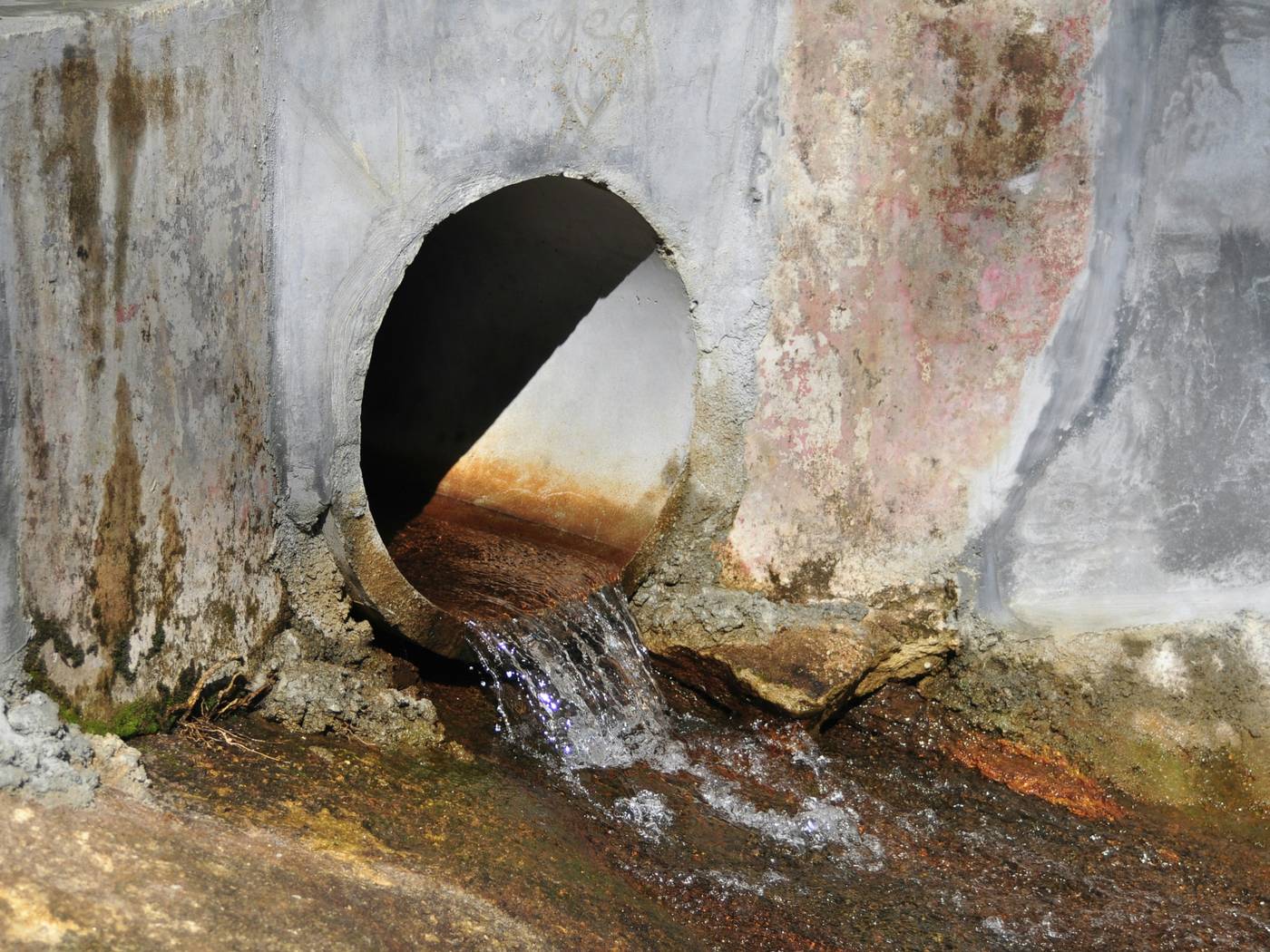
- Outfall · openingunobstructedHuman verified
- Outfall · flowpresent, clearHuman verified
- Pipe invert · depositsrust-orange stainingAI suggested